
What Vertical Planting Means for Small Shipley Gardens
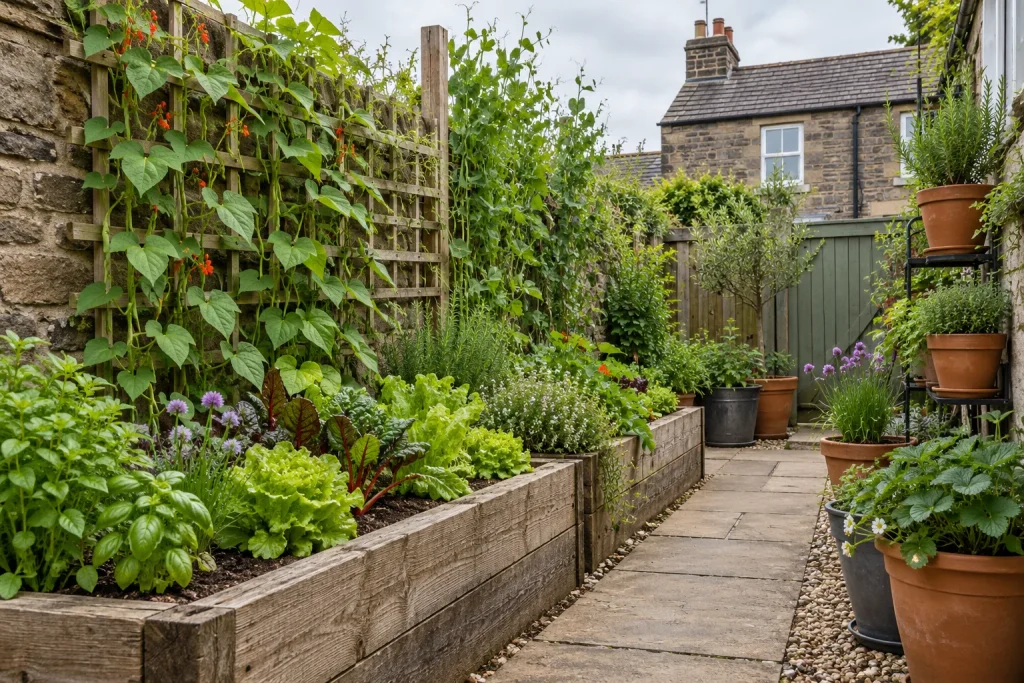
Vertical planting uses upward-growing plants and suitable supports to add greenery where ground space is limited. In a small Shipley garden, the starting point is the space you want to keep usable: a path, a seating area or room around the bins. Choose planting around that layout rather than filling every boundary.
Decide what the planting should do
You may want to soften a bare wall, bring flowers closer to a seat or create a planted backdrop to a small patio. Define that purpose before choosing a plant or support. A narrow border and a container by a doorway create different growing conditions and different maintenance needs.
Take note of light, shelter and the space at ground level. Consider where mature growth will extend, not just the size of the plant when bought. Leave room for people to use the garden and for ongoing care.
Match the climber to its support
The RHS distinguishes self-clinging climbers from plants that need wires, trellis or another support. The plant’s way of climbing affects the structure it needs. Choose the plant and support together, and check the eventual spread before committing a small boundary to a vigorous grower.
The RHS also advises having supports in place before planting. That makes it easier to position the plant and plan its training. Check the condition and suitability of an existing fence or wall before attaching new structures; the support must fit the site as well as the plant.
Keep the base of the planting practical
Look at the available soil or container space before concentrating on the height above it. A strip of planting beside paving needs access for watering and weeding. A container needs a position where it can be cared for without becoming an obstacle on a route through the garden.
Plan how you will reach the plant as it grows. A display that covers a boundary can still need attention at ground level and across the support. Keep that access in the design rather than discovering later that the only way to maintain it is to move the furniture or block a doorway.
Use a few connected elements
A small garden does not need a separate vertical feature on every side. A carefully placed climber beside a seat or one planted boundary can give the layout a clear focus. Existing shrubs, beds and open space should still work together.
For a narrow plot, the long-garden layout guide explores how planting can break up the view. Use vertical planting as one part of the plan, alongside the route through the garden and the space you want to sit in.
Allow for training and pruning
The choice of plant affects how much training and pruning the display will need. Follow guidance for that species rather than treating every climber as a hedge. Leave access to ties and supports so they can be checked as growth develops.
Ask yourself how much ongoing work you want. If you are arranging garden care, identify the plant and describe the support and access. That is a clearer brief than asking for a general trim without knowing how the plant flowers or grows.
Turn the idea into a planting brief
Photograph the boundary and the space around it. Note its approximate dimensions, the light it receives and what must remain accessible. If the idea includes a new support or changes to paving, distinguish that work from planting and ongoing care.
Shipley Gardeners can discuss border and planting work as part of a practical garden brief. Bring the plant choices, support and maintenance expectations into the same conversation. Share your planting idea with the location and photographs to begin.
Frequently asked questions
Does vertical planting mean installing a living wall?
No. It can be as simple as a suitable climber trained on an appropriate support. The right approach depends on the space, plant and upkeep you want.
Will every climbing plant attach itself to a wall?
No. The RHS explains that only some climbers are self-clinging; others need an appropriate support. Check the plant before choosing the structure.
When should the support be installed?
The RHS recommends putting supports in place before planting. Choose a suitable structure and planting position together.
What should I include in a planting enquiry?
Send photographs, the available dimensions, light conditions, access needs and the purpose of the planting. Say whether support installation is also part of the proposed work.