
Shipley Flood Defences: What Gardeners Need to Know
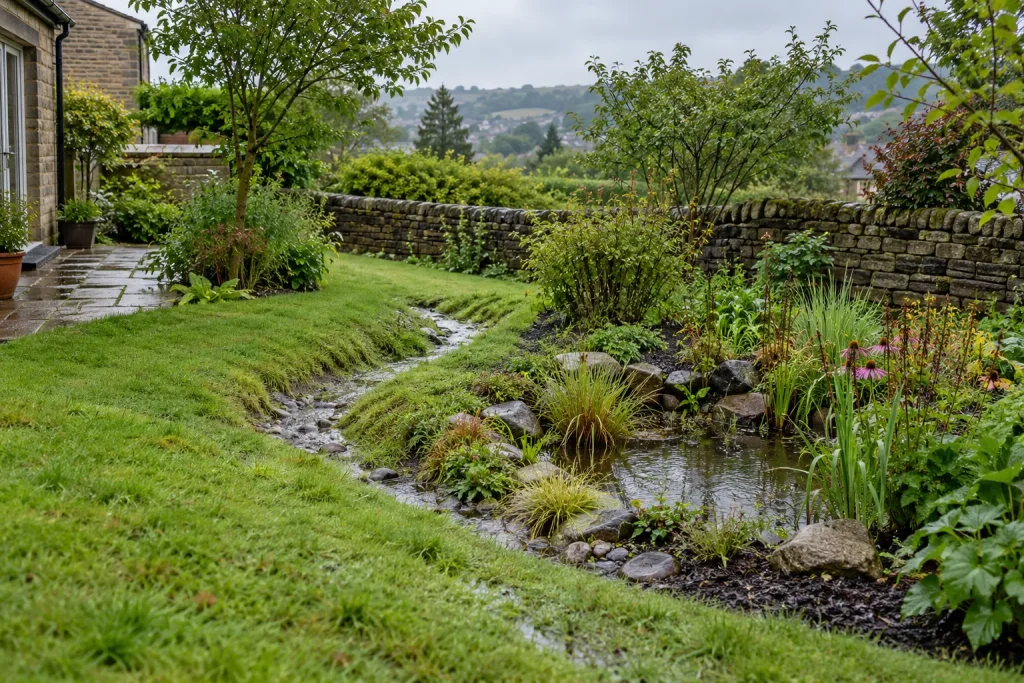
Heavy rain can leave a garden difficult to use, but a wet lawn, surface runoff and flooding from a watercourse are different problems. For Shipley homeowners, the useful starting point is to identify where water collects and how it reaches the garden. Local river-restoration work provides context; the work needed at an individual property depends on that site.
What is happening at Northcliffe Dike?
Aire Rivers Trust describes its Northcliffe Dike scheme in Shipley as part of the Better Becks programme. The project uses natural flood-management measures in Northcliffe Woods to improve the woodland and reduce downstream flood risk. Its published account of the first phase includes footpath drainage work, branch bundles on slopes and woody barriers in the channel.
Those are planned measures for a particular woodland and watercourse. They are not a ready-made design for a back garden. A homeowner can follow the project through the Trust’s updates while keeping questions about their own property focused on its drainage, access and existing features.
Record the problem before planning work
Make a simple note of what happens during and after rainfall. Does water arrive from a paved area, gather in one corner, sit on the lawn or appear beside a building? Photographs taken from the same position can make an enquiry much clearer than describing the whole garden as waterlogged.
Include how long the water remains, which areas become inaccessible and whether the problem is new. Note any recent changes such as a new paved surface, an altered boundary or a blocked outlet. These observations help distinguish routine upkeep from a drainage problem requiring a separate assessment.
Keep routine maintenance focused
Fallen leaves and loose garden debris can obscure paths, lawn edges and visible drainage points. Keeping those areas accessible makes it easier to inspect the garden and describe the problem. Clearing a surface obstruction is a different job from installing or redesigning drainage.
If seasonal debris is the immediate issue, a one-off autumn tidy can be discussed around the areas that need attention. Explain what should be retained, including established plants and any features you do not want disturbed.
Choose changes around the actual site
A planting change, a raised bed or a rain garden should be considered as part of the whole layout, rather than assumed to solve standing water. Ask where excess water would go, what maintenance the proposal needs and how it relates to the house, boundaries and access routes.
The RHS guidance on waterlogging and flooding is a useful starting point for understanding plant and soil problems. Persistent water near buildings, watercourse-related flooding or a proposed change to drainage needs the appropriate specialist assessment before construction decisions are made.
Prepare a useful garden enquiry
For a Shipley garden, send the location, photographs, the affected area and the work you would like considered. Say whether you want routine clearance, help maintaining borders or advice on a broader layout change. Include access restrictions, steps and any parts of the garden that must remain usable.
Shipley Gardeners offers garden care and practical landscaping. Start by describing the garden so the scope can be discussed. A maintenance visit should be agreed for the tasks it can address, rather than presented as a promise to protect a property from flooding.
Frequently asked questions
Does the Northcliffe Dike project protect every Shipley garden?
The Trust describes a woodland and watercourse project intended to reduce downstream flood risk. Its effect at a particular property should not be assumed from a general project description.
What should I photograph when my garden stays wet?
Show where water first appears, where it collects, nearby surfaces and any visible outlet. Note how long it remains after the rain stops.
Can a garden tidy-up fix a drainage problem?
A tidy-up can address agreed surface debris and overgrowth. Persistent standing water or a drainage redesign needs a separate assessment.
Should I copy a woodland barrier in my garden?
Start with a site-specific assessment. Measures designed for a managed woodland channel should not be copied as a general household drainage solution.