
The October Leaf-clearing Mistake That Can Damage Lawns
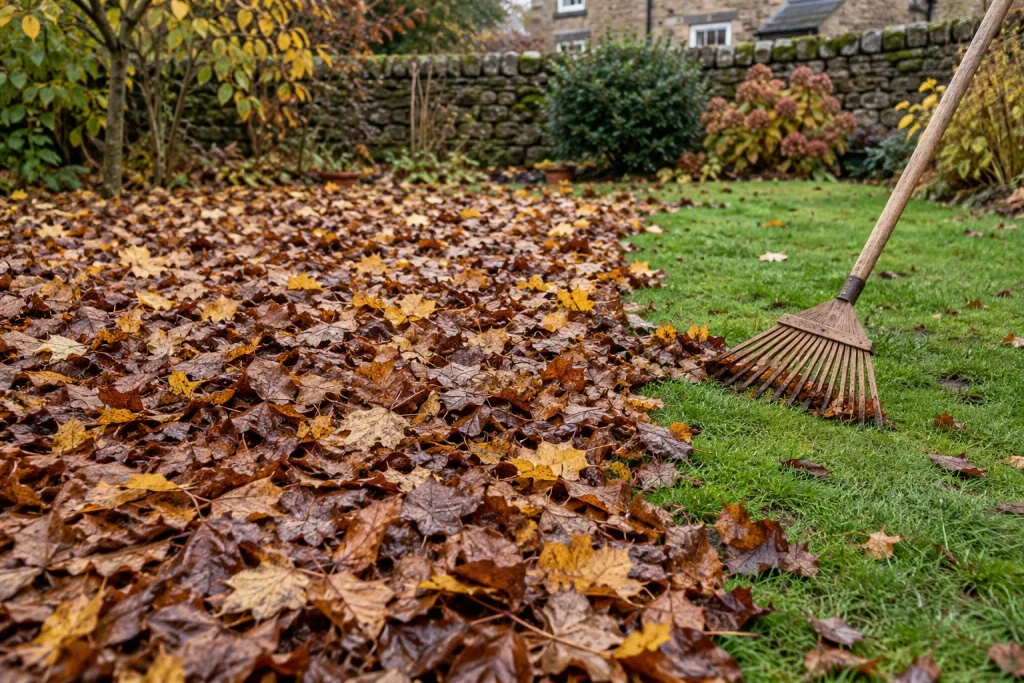
The autumn leaf-clearing mistake is letting a lawn disappear beneath a persistent layer of leaves while waiting for one big clean-up. A practical routine follows the condition of the lawn and the rate of leaf fall, rather than a single date in October.
Look at the lawn rather than the calendar
Check where leaves are collecting and whether they are becoming a wet, matted layer. A sheltered corner may need attention before the open centre of the lawn. After a windy spell, the pattern can change again, so a previous tidy does not tell you what the lawn looks like now.
You do not need a fixed percentage rule to make a decision. Look at the condition of the grass, the thickness of the leaf layer and how easily the material can be collected. Deal with an accumulating layer rather than waiting until all the trees are bare.
Choose a method that suits the conditions
Use equipment appropriate to the lawn, the leaves and the conditions. A rake lets you gather leaves from a small or awkward area; mowing with collection may suit suitable conditions and equipment. Follow the mower’s instructions and avoid turning a wet, soft lawn into a difficult working route.
There is no need to make every method part of the same job. Choose the practical option for the area and avoid dragging collected material repeatedly across the beds or blocking the route out of the garden. If you want help, explain the lawn size, tree cover and access.
Keep lawns, beds and paths distinct
The aim of clearing a lawn is not to strip the whole garden bare. Consider the different roles of a grass area, a planted bed and a collection space for leaves. Check the relevant RHS advice before deciding how to handle material, particularly if you suspect a plant disease.
Paths and entrances have a separate practical priority: keep the route usable while you work. A pile moved off the lawn should not simply become an obstacle at the gate. Plan where the collected material will go before starting.
Make a plan for collected leaves
Suitable fallen leaves can be used to make leafmould; the RHS explains collection and decomposition in its leafmould guide. The process is different from putting every kind of garden waste into one pile. Identify any suspect material and follow advice for the relevant plant problem.
Decide whether leaves will stay in an agreed area on site or form part of an arranged removal job. If you are booking a visit, make that expectation clear so the collection method and the scope match.
Fit leaf clearing into the rest of the garden work
A lawn may need leaf collection before other routine care is practical. Keep the priorities clear: gather the leaves, assess the condition of the grass and decide which further work is actually needed. Do not automatically add feeding, scarifying or pruning simply because the visit takes place in autumn.
The one-off tidy-up service can be discussed when leaves, loose debris and untidy beds need attention together. For repeated grass care, a separate mowing arrangement may be more appropriate than treating every visit as a full seasonal clearance.
Keep the routine manageable
Check the areas under and downwind of trees while leaf fall continues. A brief inspection helps you spot a build-up before the whole lawn needs attention. The interval depends on your trees, shelter and weather; use what is happening in the garden rather than promising that a weekly or fortnightly schedule will suit every property.
For a Shipley garden-care enquiry, include photographs, the approximate lawn area and any difficult access. Say whether the immediate task is leaf collection alone or a wider tidy, and what you want done with the material. Ask about autumn garden care with those details.
Frequently asked questions
Should I wait until every leaf has fallen?
Keep an eye on the lawn during leaf fall and address an accumulating layer. Waiting for one final date can leave some areas covered for too long.
How much leaf cover is acceptable?
Use the condition of the lawn and leaf layer rather than a fixed percentage. Look for accumulating, matted material and decide what needs collecting.
Can I make leafmould from the leaves?
Suitable fallen leaves can be collected for leafmould. Follow the RHS guidance and check separate advice for any material affected by a plant disease.
What should I tell a gardener before booking leaf clearing?
Describe the lawn and other areas, tree cover, access and where collected material should go. Photographs help define whether you need leaf clearing or a wider tidy.