
A Seasonal Lawn Care Guide for UK Gardens
Key Takeaways
- UK gardeners learn to tackle seasonal tasks, from preparing for winter to autumn cleanup, ensuring healthy lawns year-round.
- This article highlights eco-friendly practices like No Mow May, urging gardeners to support biodiversity while maintaining their outdoor spaces.
- Readers receive practical tips on lawn care methods for different grass types and local conditions, helping them connect with their gardens.
UK Seasonal Lawn Care Overview
In seasonal lawn care, UK gardeners work with their gardens by observing changing weather and grass growth. Each season brings different tasks. The journey starts in winter when preparation is essential; this period focuses on maintaining tools and addressing issues like soil compaction or moss buildup before spring.
As spring arrives, homeowners see new growth as the grass revives after winter. This time requires careful monitoring, timing is critical. If treatments are applied too early, efforts against weeds and pests may be wasted since they haven’t emerged yet. It’s a chance to decide between a neat lawn or allowing wildflowers to grow freely, this choice affects the garden’s appearance and supports local wildlife.
When summer hits, regular mowing becomes important as the grass grows well in warmer temperatures and longer days. Gardeners must balance keeping the grass at the right height while considering drought conditions that could stress it if not managed properly. Each season presents unique challenges, from seeding techniques in autumn to preparing lawns for tough winters, the key remains adjusting practices based on regional differences throughout the UK’s climate while promoting biodiversity within individual garden spaces.
Mowing Height and Frequency Guidelines
With spring’s arrival, grass grows quickly, making it important for gardeners to establish a regular mowing schedule. The first cut is crucial; it should occur when the grass is around 5cm tall, removing no more than one-third of the blade length at once. This promotes healthy photosynthesis and reduces stress on your lawn. As temperatures rise through April and into May, mowing frequency will increase, starting every two weeks and moving to weekly as growth accelerates.
Traditional Turf Vs. Alternative Styles
Gardeners who prefer traditional turf may find themselves maintaining short lawns for aesthetics but requiring frequent care. In contrast, those exploring different styles can let their lawns thrive by participating in initiatives like No Mow May, which encourages biodiversity without sacrificing visual appeal. Allowing parts or all of your lawn to grow wild supports wildflowers and beneficial insects while aiding local wildlife habitats during warmer months, a choice that offers ecological benefits and enhances character as nature flourishes with longer daylight hours.
The Pros & Cons of UK Lawn Care Choices
Pros
-
Traditional lawns create a neat space for both play and relaxation, which makes gardens look better.
-
Wildlife-friendly lawns help more plants and animals thrive by allowing wildflowers to grow, supporting local ecosystems.
-
Many lawn types need little feeding, which lowers environmental impact and cuts down on maintenance costs.
-
Seasonal care works with natural weather patterns to boost the growth and health of the lawn.
Cons
-
Maintaining closely mown traditional lawns takes a lot of time and effort, especially during peak growing seasons.
-
If you leave the grass uncut, it can look messy, which some gardeners might not like.
-
Foot traffic on wet or frosty grass can lead to soil compaction, which may harm the lawn's health.
-
Weeds and moss can grow quickly if they're not controlled properly, impacting the overall quality of your lawn.
Spring Lawn Maintenance Essentials
With spring comes the time for gardeners to focus on maintenance tasks that ensure a healthy lawn. As temperatures rise, it’s essential to evaluate the condition of your grass. The first mowing typically occurs when the grass reaches about 5cm, this step is crucial because cutting it too short can stress your lawn and stunt its growth. Maintaining an appropriate height also aids photosynthesis; aim to trim no more than one-third of the blade length each time you mow.
As April progresses and growth accelerates, you’ll likely find yourself mowing more often, switching from every two weeks to once a week. While this may seem frequent, regular mowing keeps lawns looking fresh during the busy growing season. If you enjoy a neatly manicured yard, staying on top of these cuts creates a welcoming space for family gatherings or relaxing outdoors.
Many gardeners are exploring options that celebrate nature’s beauty while boosting biodiversity by letting some parts of their lawns grow wild, especially during events like No Mow May. This method supports wildflowers and beneficial insects without sacrificing visual appeal; it’s about finding balance between enjoying gardens and nurturing ecological health as everything blooms in spring.
Addressing Other Lawn Issues
to regular mowing, it’s important to tackle problems like moss buildup or compacted soil that may have developed over winter. Spring is ideal for scarifying, this process involves raking out dead grass (thatch) along with unwanted moss, to help nutrients penetrate into the soil while making room for new shoots. For larger lawns, mechanical tools might be helpful; otherwise, manual methods work well in smaller spaces where personal effort makes a difference in caring for your green area.
Fertilisation Needs
Now is also a good moment to consider whether fertilisation is necessary; although not all grasses require feeding regularly, applying high-nitrogen fertilisers selectively can encourage vigorous growth, especially in worn areas after winter, or if you’re focusing on wildflower diversity, then there’s no need for additional feeding! By paying attention to local weather patterns alongside specific features of your lawn, from areas under heavy use needing extra care versus shaded spots thriving differently, you’ll see how tailored strategies lead directly toward vibrant greenspaces come summer days ahead!
Lawn Aeration and Soil Compaction
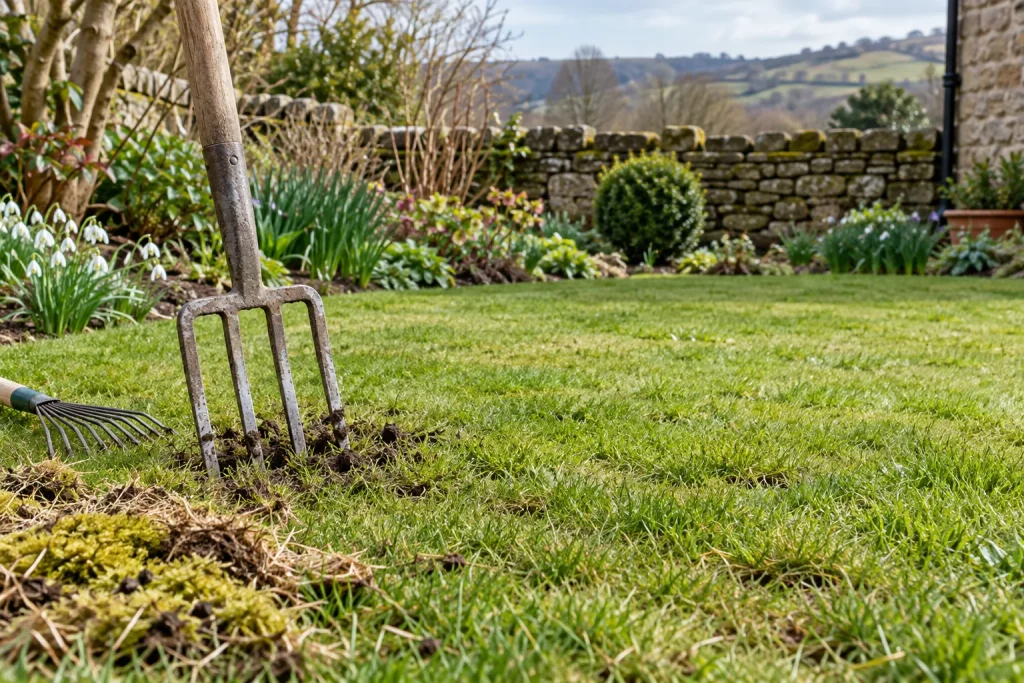
Compaction becomes an issue in spring, especially after a wet winter. Gardeners can address this through aeration, which improves soil structure and supports root growth. To aerate your lawn, use a garden fork or mechanical aerator to push tines about 3–4 inches deep into the ground at regular intervals. This process breaks up compacted areas and allows air, water, and nutrients to reach deeper soil layers. For smaller gardens, manual methods work well; larger lawns might benefit from renting an aerating machine.
Assessing Other Lawn Issues
After aeration, ideally before planting new seeds, it’s time to check for other problems like moss growth or thatch buildup that could affect overall health. Scarifying in spring can refresh your lawn by removing these layers and encouraging fresh grass shoots to grow without obstruction. Consider local conditions, as some areas may have unique moisture levels influencing how often you need to repeat these practices throughout the season.
Laying Groundwork for Summer
By using these strategies now and being mindful of your lawn’s needs, including knowing when to scarify, you prepare vibrant greenspaces to thrive under summer’s warmth!
Essential Monthly Lawn Care Tasks
| Task/Activity | Timing | Recommended Products/Tools | Additional Notes |
|---|---|---|---|
| Keep off the lawn | December | Use paths during wet or frosty weather | |
| Inspect the lawn | February | Check for moss or thatch | |
| First cut | March or April | Mower on highest setting | Remove no more than one-third of grass blade length |
| Begin weed treatment | April | MG Evergreen Complete 4in1 | Use selective weedkiller |
| Aerate/spike | Spring | Garden fork or mechanical aerator | Insert tines 3–4 inches into the ground |
| Apply high-nitrogen feed | March or April | Miracle-Gro EverGreen Complete 4 in 1 | Water thoroughly after application if no rain is due |
| Repair summer damage | September | Lawn seed | Spike and rake before sowing |
| Autumn feeding | November | Miracle-Gro EverGreen Autumn Lawn Care, Miracle-Gro EverGreen Premium Plus Autumn & Spring Lawn Food | Feed before winter sets in if not already done |
| Last opportunity to sow seed | Early October | Prepare lawn for winter conditions | |
| Watering frequency for new lawns | 7 to 10 days | Keep newly sown areas moist until established |
Lawn Feeding and Fertiliser Timing
As the growing season unfolds, timing is crucial for nourishing your lawn. Spring is an excellent opportunity to consider fertilisation; yet, it must be customised according to grass types and local conditions. For standard lawns, using a high-nitrogen fertiliser in March or April can boost growth and nutrient absorption. This slow-release option allows nutrients to reach the roots without overwhelming them, water thoroughly just before expected rain for optimal absorption. If you prefer a wildlife-friendly approach with wildflowers among longer grasses, feeding isn’t needed; these ecosystems often thrive without extra help.
Early Summer Care
By early summer, as temperatures rise and grass activity increases, reassess your fertilisation plans, especially if some areas appear worn from foot traffic or weather stress. A second application of fertiliser may be necessary but should follow careful observation of lawn health rather than strict adherence to dates on a calendar. Successful lawn maintenance involves following guidelines and understanding your unique landscape, a vital part of caring for vibrant greenspaces during warmer days ahead!
Watering, Drought, and New Lawns
As the warm months arrive, keeping your lawn healthy becomes important, especially for watering. Established lawns usually thrive on natural rainfall and need extra water only during long dry spells. Newly seeded or turfed areas require consistent watering until fully established, gardeners should hydrate these spots every 7 to 10 days if it’s still dry. When deciding how much water to use, it’s best to soak thoroughly rather than sprinkle lightly; this helps roots grow deeper by allowing moisture to reach about an hour or more under a sprinkler’s steady flow.
Timing matters too: watering early in the morning or late in the evening reduces evaporation losses and ensures grass gets what it needs before the sun heats up.
In drought conditions where established grass may turn brown but isn’t dead, the strength of many types often allows recovery once rain returns, it’s wise not to rush into heavy irrigation unless necessary. Instead of relying solely on mains water that can raise costs and harm the environment, using stored rainwater or greywater from household tasks can be cost-effective and eco-friendly. By staying aware of these key aspects of lawn care and adjusting practices based on local weather patterns and specific garden needs throughout summer, gardeners help their outdoor spaces thrive through careful management!
Lawn Care Myths and Facts Unveiled Today
-
Many gardeners think a closely mown lawn is the only way to create a beautiful garden. A relaxed, wildlife-friendly lawn can also look good and boost biodiversity by allowing wildflowers and other plants to grow.
-
A common belief is that all lawns need regular feeding to thrive. In reality, many lawns do fine without fertiliser, especially those designed for wildlife support that don't require extra nutrients.
-
People often believe mowing should follow a strict schedule. But when you mow should depend on local weather conditions and grass growth since cold or dry spells can complicate lawn care.
-
Some assume moss is always bad for lawns and needs removal. Yet sometimes leaving moss can actually help increase lawn biodiversity and support various types of wildlife.
-
There's an idea that established lawns need watering during summer to survive. These lawns usually bounce back from drought once rain returns, so extra watering tends not to be necessary unless dealing with new grass growth.
Wildflower Lawns and no Mow May
With the growing season in full swing, many gardeners are seeking ways to care for their lawns while supporting local wildlife. Embracing wildflower lawns is becoming popular, especially during events like No Mow May. This initiative encourages participants to stop mowing until at least August so native plants and beneficial insects can thrive alongside grass. By allowing areas to grow without cutting, homeowners create natural habitats and enjoy seasonal flowers that add colour to their gardens.
Transitioning Lawn Management
For those considering a relaxed approach to lawn care, spring is an ideal time to start new wildflower meadows or enhance existing mixed-grass areas. Many grasses coexist well with wildflowers without requiring extra feeding; this method supports ecological health while reducing maintenance compared to regular turf options. Gardeners should assess soil conditions and understand their regional climate before making changes, this knowledge helps create an environment where both plants and pollinators can thrive throughout the warmer months ahead!
Autumn Cleanup and Winter Preparation
As autumn approaches, UK gardeners should prepare for cleanup tasks that ready the lawn for winter. This time is crucial to check the grass’s health after summer wear. Fallen leaves can cover grass, so it’s essential to rake them regularly or use a mower set at higher cutting heights. This keeps lawns clear and allows for nutrient-rich compost from shredded leaves. Any bare patches need attention, sowing seed in early September gives new seedlings time to establish before frost.
Feeding
Alongside cleaning and seeding, feeding your lawn becomes crucial during this transition period. Applying an autumn-specific fertiliser like Miracle-Gro EverGreen Autumn Lawn Care around late October helps strengthen grasses against tough winter conditions by promoting root development instead of lush top growth, a smart move for ensuring resilience through colder months.
Final Touches
If you’ve fallen behind on mowing earlier in the season, November brings another opportunity: mild weather allows for one last trim if needed while making room for final leaf collection before everything settles into dormancy. By taking these steps now, gardeners set themselves up for healthy turf come spring!
FAQ
What are the two main styles of lawns described in the document, and how do they differ in maintenance?
The document outlines two types of lawns: a traditional, well-maintained lawn and a relaxed, wildlife-friendly lawn that requires less frequent mowing.
When is the best time to stop mowing for No Mow May, and what benefits does this practice offer?
Stop mowing for No Mow May in early May to allow grass to grow and promote plant diversity for local wildlife.
What should gardeners do during winter to protect their lawns and maintain their tools?
In winter, avoid walking on wet or frosty grass to prevent damage and maintain paths, while also checking and maintaining tools for the upcoming season.
How can homeowners effectively address moss and thatch in their lawns during spring?
Homeowners can remove moss and thatch in their lawns this spring using a spring-tine rake or mechanical scarifier to improve water and nutrient flow into the soil.
What is the recommended mowing height for everyday lawns in April, and why is it important to follow this guideline?
The suggested mowing height for regular lawns in April is 3cm to promote healthy grass growth and reduce lawn stress.
How often should new lawns be watered in dry weather to ensure proper establishment?
New lawns require consistent watering every 7 to 10 days during dry spells to ensure proper seed germination and root growth.